
Intelligent Tightening Workstation Solutions for Industrial Assembly
KURAN combines torque reaction arms, position control, poka-yoke devices, and tool integration to build safer and more controlled tightening workstations.
Torque Reaction Arms from 10 Nm to 5,000 Nm
Reduce operator reaction force and support safer tool handling with standard and customized torque arm structures for different assembly workstations.
Tool Position Control and Poka-Yoke for Error-Proof Tightening
KURAN verifies tool position, guides tightening sequences, prevents missed or repeated fasteners, and records results for more reliable assembly control.
Common Tightening Workstation Challenges
When tool support, position verification, sequence control, and result recording are not coordinated, assembly workstations may face operator strain, missed or repeated fasteners, process variation, and limited traceability.
Uncoordinated Tool and Program Selection
Using the wrong tool, socket, bit, or tightening program can produce results that do not match the intended fastening specification.
Missed, Repeated, or Out-of-Sequence Fastening
Without point verification and sequence guidance, operators may skip a fastening point, tighten it twice, or work in the wrong order.
Reaction Torque and Tool-Handling Strain
Supporting a heavy tightening tool while resisting reaction torque can increase fatigue and make repeated positioning less stable.
Limited Tightening Record Traceability
Without point-level result recording, it can be difficult to confirm completed operations or investigate product and batch issues later.
These risks can be reduced by combining the appropriate tightening tool with torque reaction support, process control, error-proofing, and data recording.
How KURAN Builds a Controlled Tightening Workstation
A controlled workstation can combine torque reaction support, tightening control, error-proofing devices, and tool adapters according to the required torque, fastening sequence, point layout, and system interfaces.
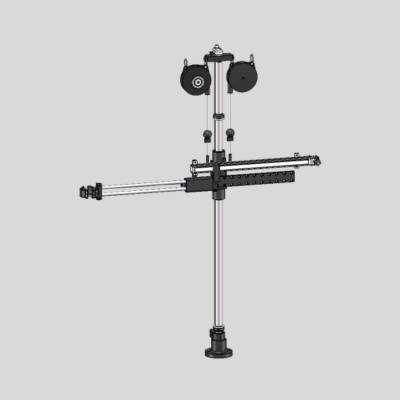
Absorb and transfer reaction torque while supporting tool weight to reduce operator strain and improve handling stability.
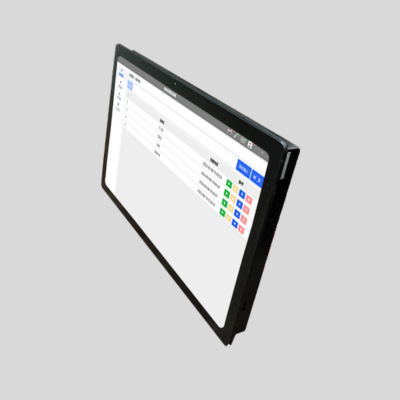
Coordinate tool programs, fastening-point status, operating sequences, and result data according to the configured workstation process.
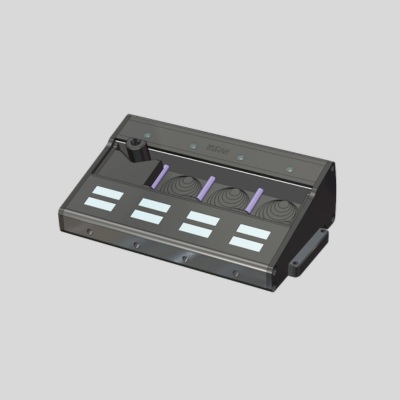
Use socket, bit, program, and position verification devices to reduce wrong selections, missed fasteners, repeated tightening, and sequence errors.
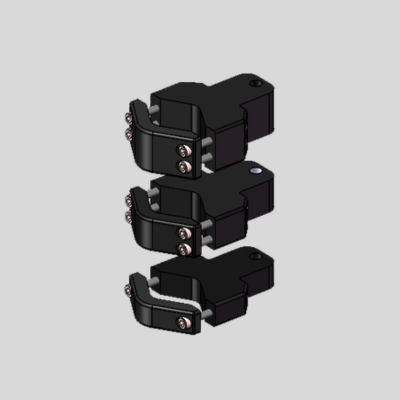
Use industrial handles, tool adapters, mounting bases, and application-specific components to connect the tightening tool with the selected workstation configuration.
Tightening Data Recording and Traceability
When configured with the KR002-H01 supervisory controller, the workstation can record point parameters, torque, angle, tightening curves, and results for production review and traceability.
Point-Level Result Recording
Record configured fastening-point parameters, torque, angle, tightening curves, and result status for later review.
Product and Batch Association
Associate tightening records with products or production batches through barcode or ID input when the required interface is configured.
Historical Record Review
Review stored tightening records by fastening point, task, product, or batch according to the controller’s configured data structure.
External Data Interfaces
Exchange required production and result data with compatible PLC, MES, barcode, or other external systems through confirmed communication interfaces.
Why Choose KURAN for Intelligent Tightening Workstations?
KURAN combines mechanical tool support, position control, error-proofing, and system integration to configure tightening workstations around your tools, products, and assembly process.
Coordinated Tightening Control
Coordinate tightening programs, fastening points, and process status to support more consistent workstation execution.
Configurable Error-Proofing
Use position verification, sequence guidance, and selection controls to reduce missed, repeated, and incorrect fastening steps.
Point-Level Data Traceability
Record tightening parameters and results by fastening point, product, or batch for review and production traceability.
Modular Workstation Configuration
Combine torque reaction arms, controllers, poka-yoke devices, and tool adapters according to each workstation’s process requirements.
Production System Integration
Connect compatible tightening tools, PLC, MES, barcode systems, and external devices through the required signals and communication interfaces.
Application Engineering Support
Receive configuration recommendations based on your tightening tool, torque range, workpiece, fastening-point layout, installation space, and interface requirements.
Applications for Intelligent Tightening Workstations
KURAN configures controlled tightening workstations for automotive, auto parts, electronics, and general industrial assembly processes that require tool support, position guidance, error-proofing, or tightening data traceability.
Automotive Manufacturing
Support controlled fastening at multi-point vehicle assembly stations with reaction-torque absorption, position guidance, and tightening-result verification.
Automotive Component Assembly
Control tightening sequences and program selection across repeat production of automotive components with multiple variants or fastening requirements.
Electronics and 3C Assembly
Use position guidance and process verification for compact, multi-point assembly where missed, repeated, or incorrect fasteners must be reduced.
Machinery and Industrial Equipment
Configure reaction arms and workstation controls for equipment assembly with different torque ranges, working reaches, mounting constraints, and traceability requirements.




We are trusted globally
Why not join us




What Our Clients Say



Frequently Asked Questions About Intelligent Tightening Workstations
These questions cover the information manufacturing engineers, process planners, and system integrators commonly need before selecting or retrofitting a controlled tightening workstation.
What information should I provide for a tightening workstation recommendation?
Provide the tightening tool model, torque range, tool weight, required working radius, installation space, fastening-point quantity and coordinates, workpiece variants, and whether position detection or data integration is required. Photos, layout drawings, and interface details help KURAN evaluate a suitable configuration more accurately.
Can KURAN integrate my existing tightening tool into a controlled workstation?
In many cases, yes. KURAN can evaluate the tool dimensions, mounting interface, weight, torque output, and communication or I/O requirements, then match the tool with a torque reaction arm, KR005 tool adapter, and suitable controller configuration. Final compatibility must be confirmed from the tool model and technical data.
Do I need only a torque reaction arm or a complete intelligent tightening system?
A torque reaction arm is suitable when the main requirement is supporting tool weight and absorbing reaction torque. Add position detection and a tightening controller, together with poka-yoke devices, when you also need point verification, sequence guidance, wrong-selection prevention, result recording, or production traceability.
How does KURAN help prevent missed, repeated, or out-of-sequence tightening?
A configured workstation can compare the detected tool position with the active fastening program, guide the operator to the required point, and track each point's completion status. Socket, bit, or program selectors can also be integrated when the process requires additional poka-yoke control.
Can the system verify tool position across multiple fastening points?
Yes. Compatible torque reaction arms can be configured with XY or XYZ position detection. The controller can use programmed point data and visual prompts to guide the operation. The appropriate sensor type, working range, and point layout should be confirmed for the actual workstation.
Can tightening results be recorded and connected to PLC or MES?
The KR002-H01 control system can record point parameters, torque, angle, tightening curves, and results for later review. PLC, MES, barcode, and other system connections depend on the required signals, data fields, and communication method, so KURAN should review the interface requirements before configuration.
What torque ranges and mounting configurations are available?
KURAN's torque reaction arm portfolio covers applications from 10 Nm to 5,000 Nm. Depending on the model, configurations can include bench, floor, side, top, column, or gantry-style installation, together with different reaches and XY/XYZ detection options. Final selection depends on torque, tool weight, reach, and available space.
Can KURAN customize the workstation for my product and assembly layout?
Yes. Working reach, arm structure, mounting base, tool adapter, handle arrangement, point-detection method, controller program, and external interfaces can be evaluated around the workpiece and station layout. A customized proposal requires product drawings or photos, tool information, fastening-point data, and installation constraints.
Request a Tightening Workstation Recommendation
Tell us your tightening tool model, torque range, tool weight, working radius, fastening-point layout, installation space, and control requirements. KURAN engineers will review your application and recommend a suitable configuration.